Home / Permanent Exhibition about Joža Bertoncelj / Master Joža Bertoncelj (1901–1976)
Master Joža Bertoncelj (1901–1976)
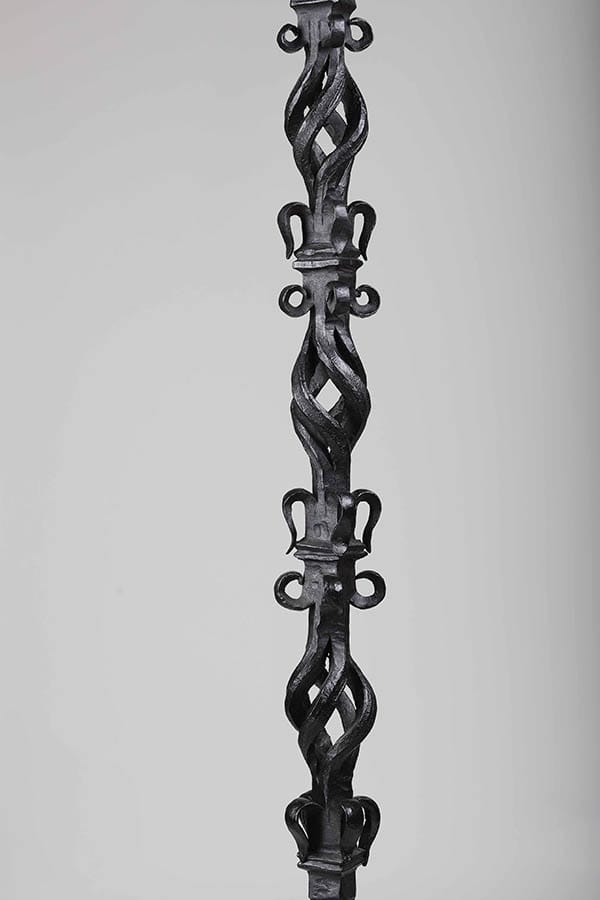
Joža Bertoncelj, the most important Slovenian master of modern iron design, began his career in Kropa at the Plamen Metal Cooperative as a draftsman in an artistic blacksmithing workshop (founded in 1937). Before and during World War II, the workshop cooperated with architects of the Plečnik School of Architecture, and equipped a number of public buildings with wrought iron products. Bertoncelj’s first plans for trade in wrought iron products were designed in the so-called national style and based on examples from foreign literature.
In 1939, Bertoncelj attended a drawing course with the architect France Tomažič. Following World War II, he took over the position of master of the artistic iron workshop at the Plamen Screw and Nail Factory, successor to the pre-war cooperative. Many products, especially typical Kropa candlesticks, chandeliers, etc. were designed for sale in the ‘Dom’ home and handicraft shop in Ljubljana. The authors of the designs were Joža Bertoncelj, and later the architect Marjan Gašperšič and graduates of the School of Artistic Metallurgy in Kropa.
Joža Bertoncelj finally devoted himself to the independent design of iron during his work at the Institute of Metallurgy in Ljubljana (1953–1955). In the workshop of the institute, he forged a monumental skeleton of a hostage in 1954, which is part of a memorial designed by the architect Boris Kobe in the area of the former labour camp in Ljubelj above Tržič. During this period, he received the status of a freelance designer and the title of master. He was a member of the Designers’ Society of Slovenia since its founding in 1951.
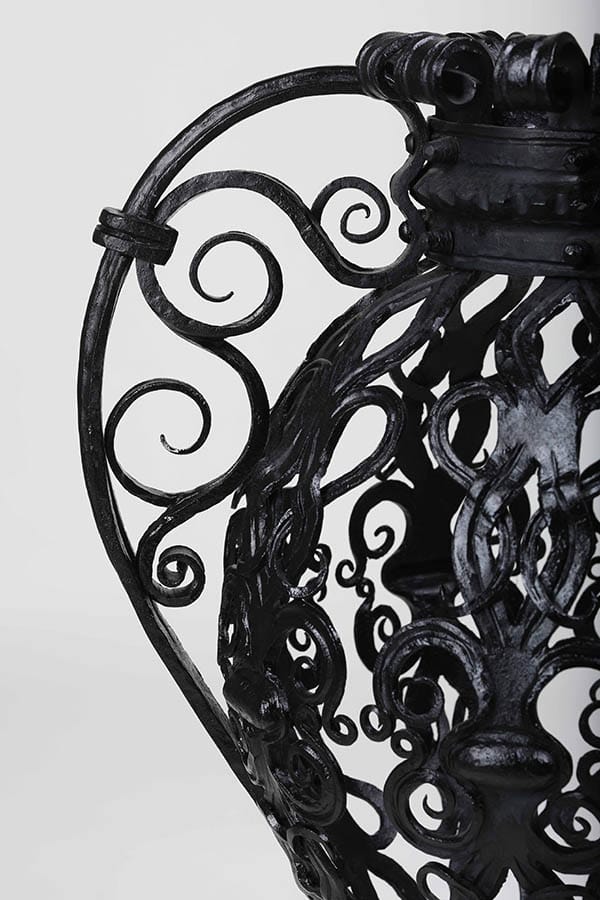
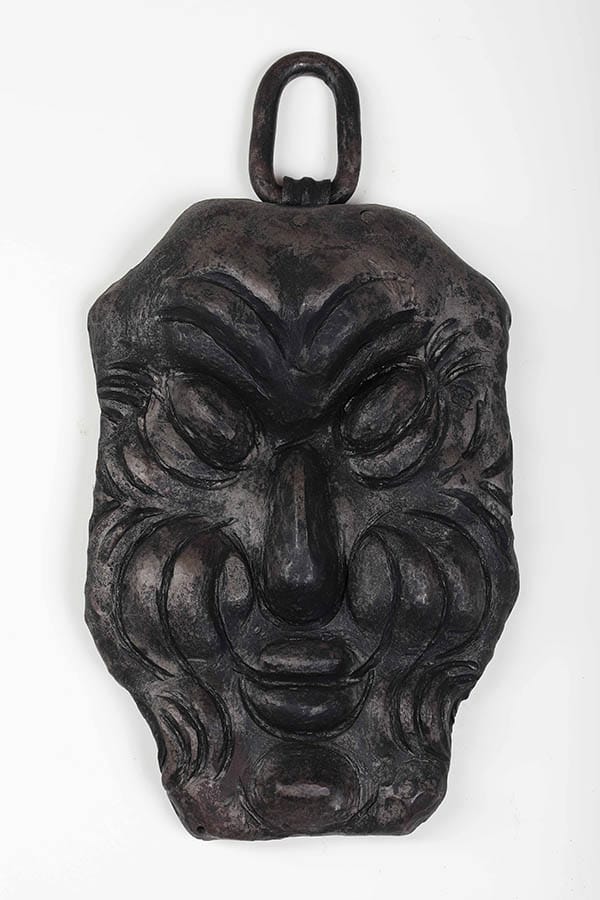
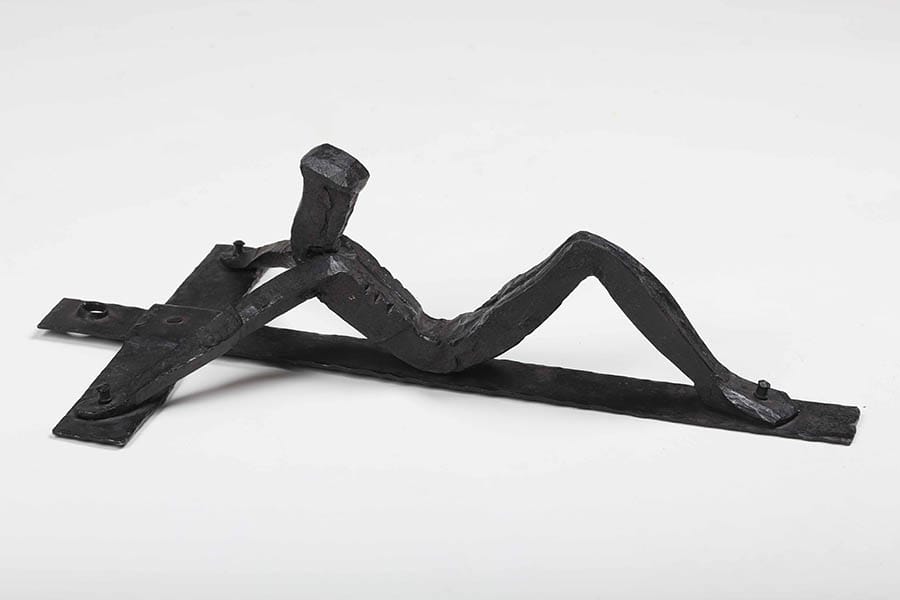
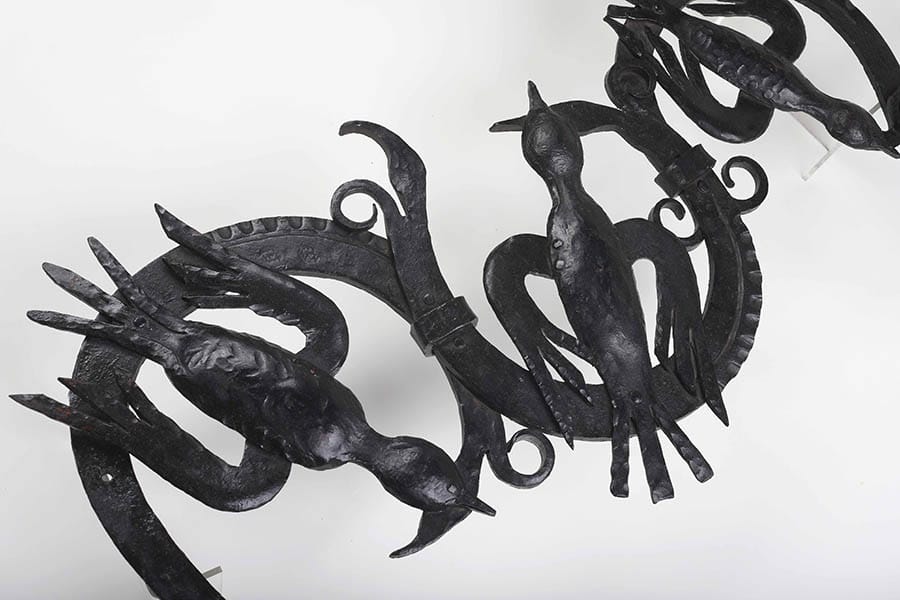
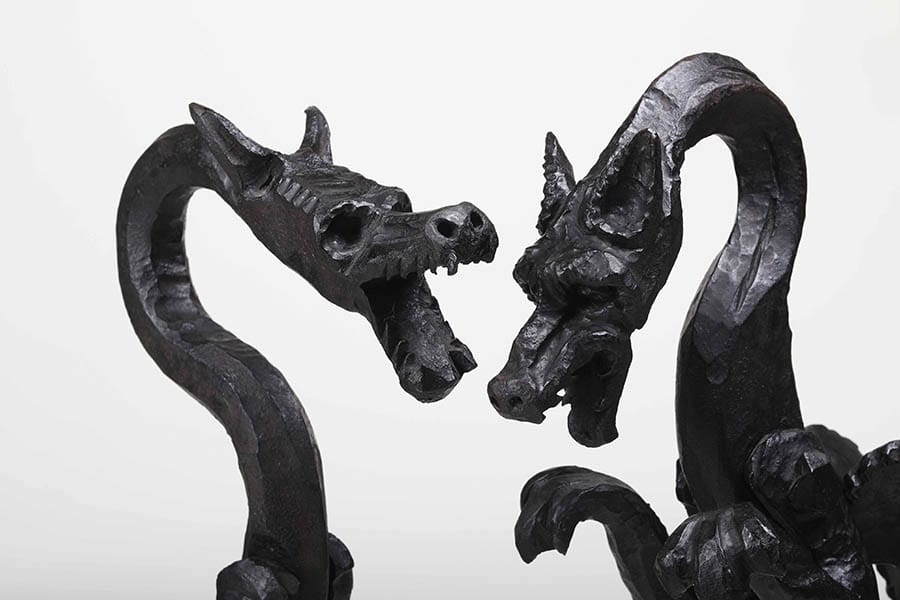
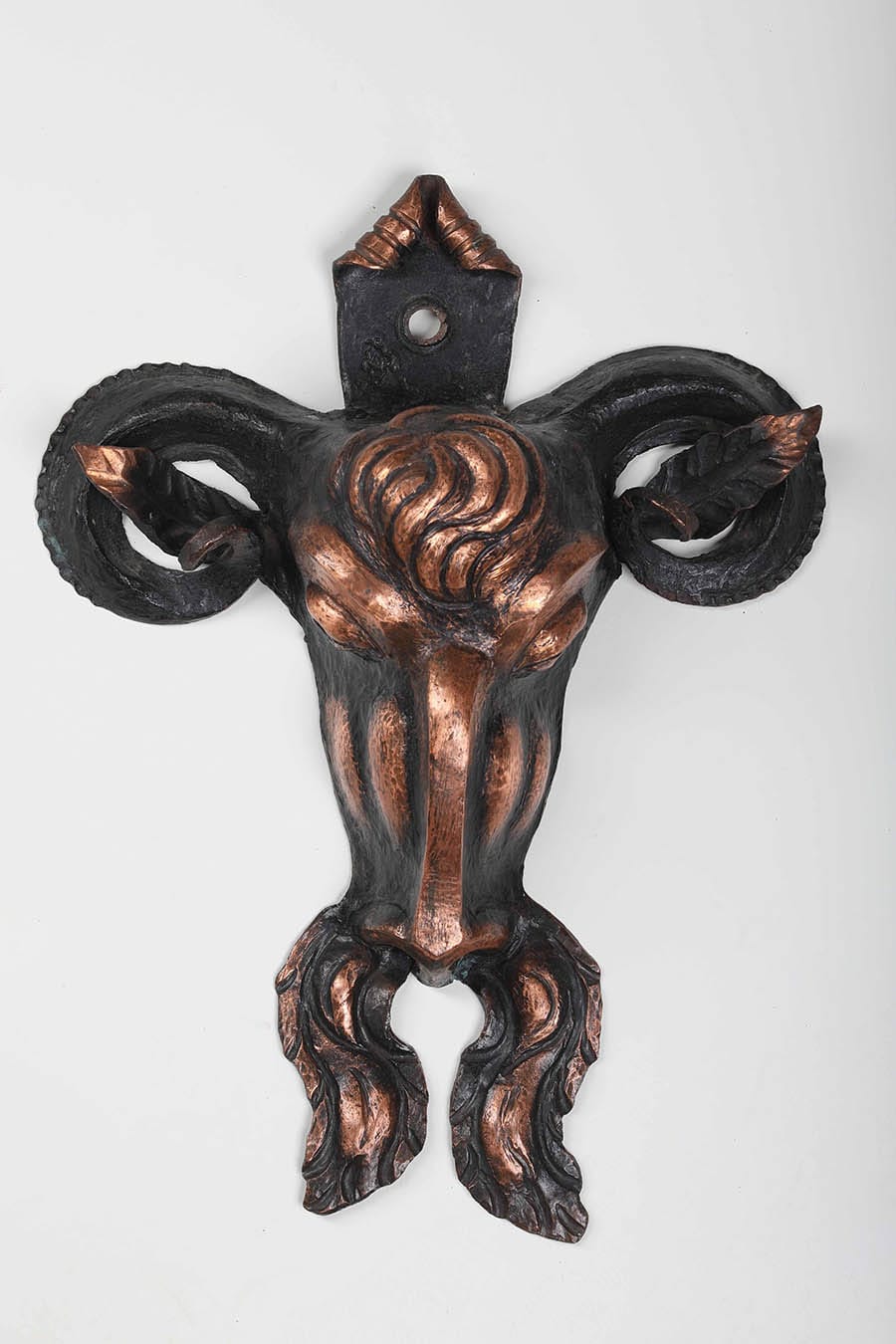
After 1956, he first worked in Kamna Gorica and then finally in Kropa. The quality peak of this period is represented by wrought iron window nets and mouldings, especially wrought dragons, masks and ram heads. In 1960, according to the plans of Boris Kobe, he made fourteen wrought iron dragons for the Institute for the Regulation of the Old City Core of Ljubljana. They were originally located next to the lamps on the embankment of the Ljubljanica river. Bertoncelj was awarded a gold medal in 1974 at the International Craft Fair in Munich for his wrought iron Christ on the cross.
He donated a selection of his wrought iron works of art to the Iron Forging Museum in 1975. Since then, his works has been exhibited in the museum as a special collection.